
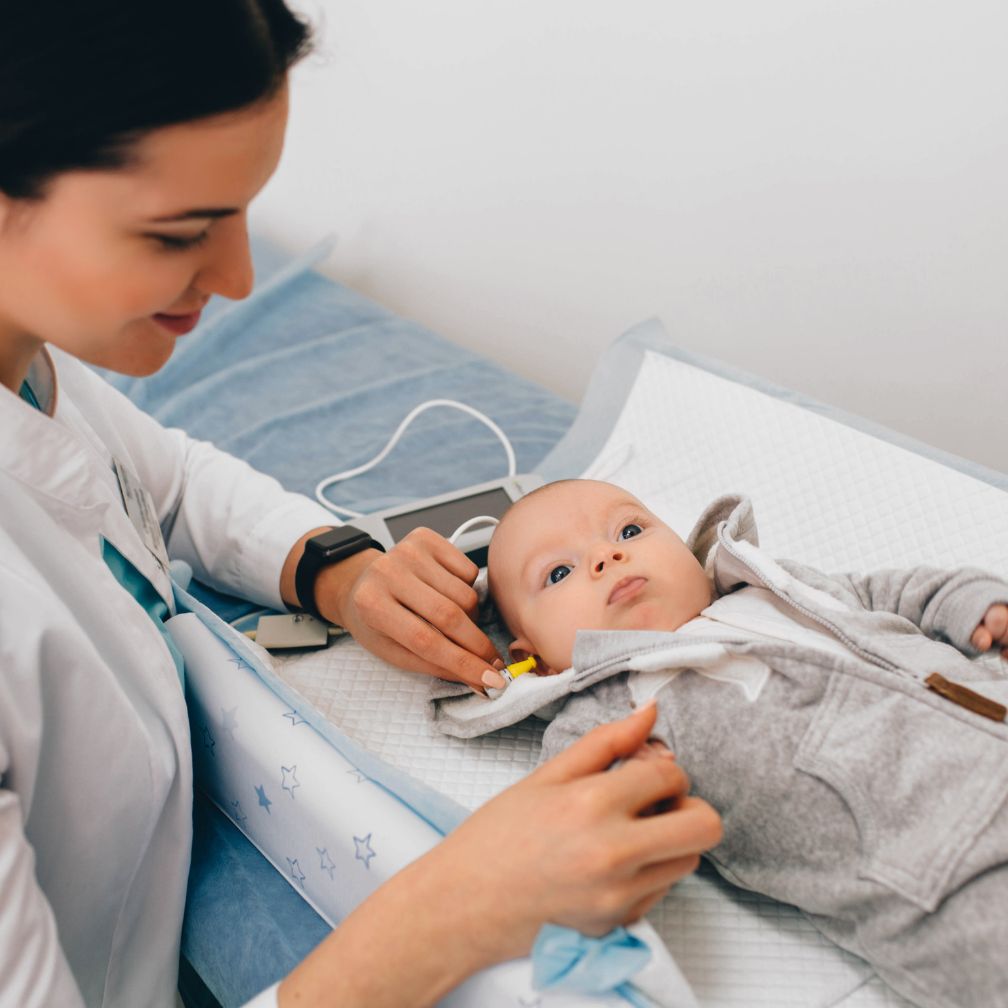
For parents of newborns, discovering their infant faces auditory loss can seem profoundly disheartening to navigate. But the positive fact is that because of prompt medical testing and early intervention, young children with hearing deficits will effortlessly prosper. Beyond doubt, these children can build speech patterns, relational abilities, and robust connections with their society, realizing a wonderful life!
Combining traditional hearing devices with specialized cochlear technology provides two highly successful solutions for assisting infants who exhibit hearing loss. Further in this guide, we review how these technologies function and how to decide which unit is right for your child.
Understanding Infant Hearing Loss
Hearing loss in infants can be caused by a range of factors, including:
- Potential genetic predispositions (even without documented familial lineage)
- In-utero viral infections including cytomegalovirus (CMV) and rubella cases
- Unexpected labor complications, featuring perinatal hypoxia or early delivery
- Select therapeutic drugs utilized within neonatal intensive care units
What stage carries the most weight? Early diagnostic testing. Owing to this mandate, babies across the United States undergo mandatory hearing screening prior to hospital discharge. Dedicated pediatric hearing specialists routinely implement the “1-3-6” guideline:
- First-stage screening executed before 1 month of life
- Full clinical diagnosis established within 90 days of birth
- Clinical intervention (utilizing hearing aids or therapy) started within 6 months of age
Reaching these early milestones provides infants optimal opportunities for healthy speech, language, and brain development. If you wish for additional counsel concerning these newborn screens, your pediatrician remains eager to support you!
Deploying Hearing Aids for Newborns
When infants display mild to severe hearing challenges, pediatric hearing aids typically serve as the initial intervention option. Such small, wearable instruments amplify acoustic signals, helping infants perceive spoken dialogue and surrounding sounds with greater clarity.
Modern infant hearing instruments function as:
- Fully safe for direct use on newborns only a few weeks after birth
- Manufactured with cushioned, comfortable ear molds that adapt as the infant matures
- Furnished with secure battery housing closures and dedicated pediatric safety elements
- Expertly configured by a pediatric audiology specialist to accommodate your infant’s exact hearing needs
While your infant develops, these devices demand ongoing professional tuning to guarantee ideal ear-canal fit and maximum performance.
Pediatric Cochlear Implants: An Advanced Solution
If a baby experiences severe to profound sensorineural hearing loss with limited benefit from wearable hearing aids, clinicians often recommend a cochlear implant. Unlike hearing aids, cochlear technology:
- Need a targeted surgical procedure for final insertion within the temporal bone area
- Completely bypass compromised regions inside the inner ear anatomy
- Transform acoustic energy into digital electrical impulses that excite the auditory nerve fibers directly
Cochlear implants are:
- Formally FDA-cleared for application in young infants starting at 9 to 12 months of age
- Maximally beneficial when paired with early developmental therapy and strong family involvement
- Prescribed only after comprehensive diagnostic assessments by an expert audiologist and ear, nose, and throat doctor
Such a comprehensive process requires high-resolution imaging, detailed hearing tests, and detailed consultations regarding anticipated long-term progress.
Evaluating Hearing Aids Against Cochlear Implants
- Mild to severe auditory decline uses Hearing Aids; Severe to profound hearing loss: Cochlear Implants
- Non-Invasive acoustic positioning: Hearing Aids; Invasive surgical installation: Cochlear Implants
- Physical sound amplification: Hearing Aids; Direct electrical signal generation: Cochlear Implants
- Starts at Infancy: Hearing Aids; Starts at 9-12 Months: Cochlear Implants
Summary Thoughts: Supporting Your Child’s Hearing Journey
If your baby has been diagnosed with hearing loss, remember that proven treatment choices and dedicated care teams are available. Under the care of specialized pediatric hearing doctors, most children construct communication skills that mirror those of their age group.
Irrespective of whether your child receives fitting for hearing aids or surgery for cochlear devices, prompt intervention delivers permanent lifelong benefits.
Have questions about your baby’s hearing health? Reach out to us today to receive a complete diagnostic assessment and personalized rehabilitation plan.