
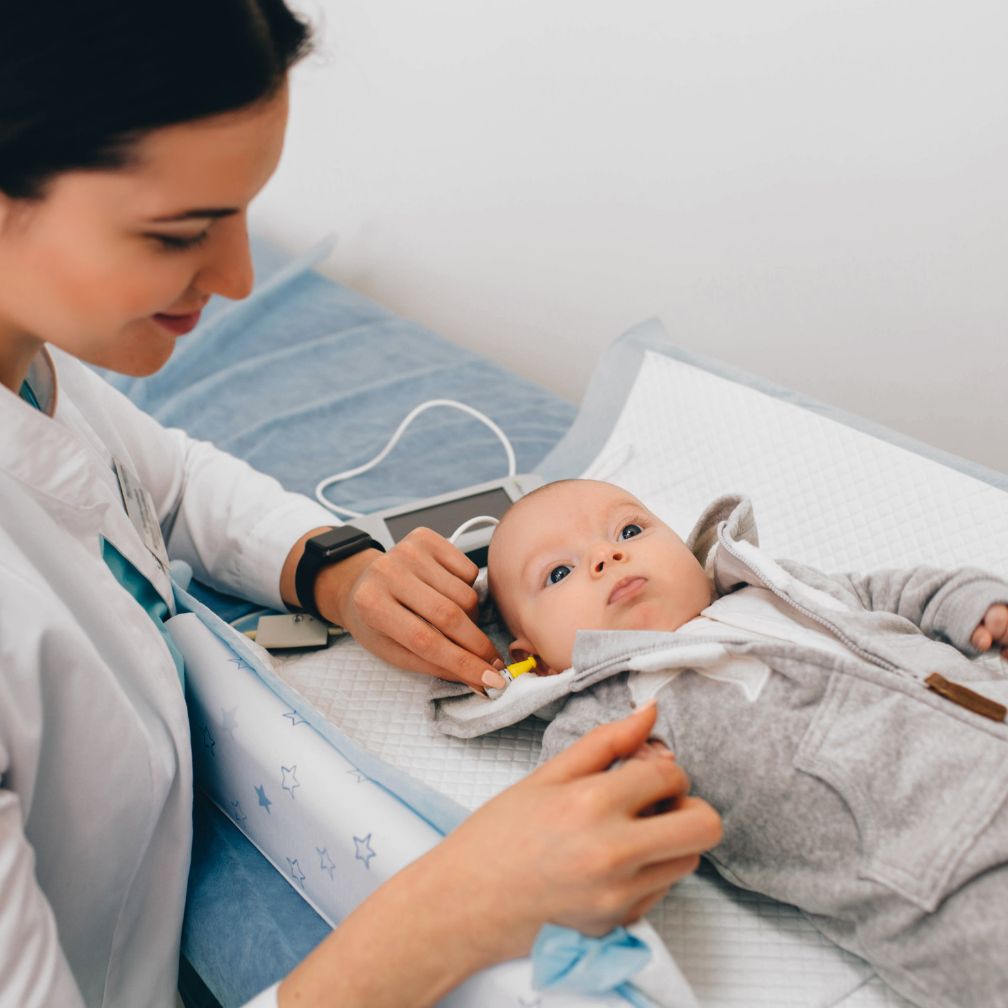
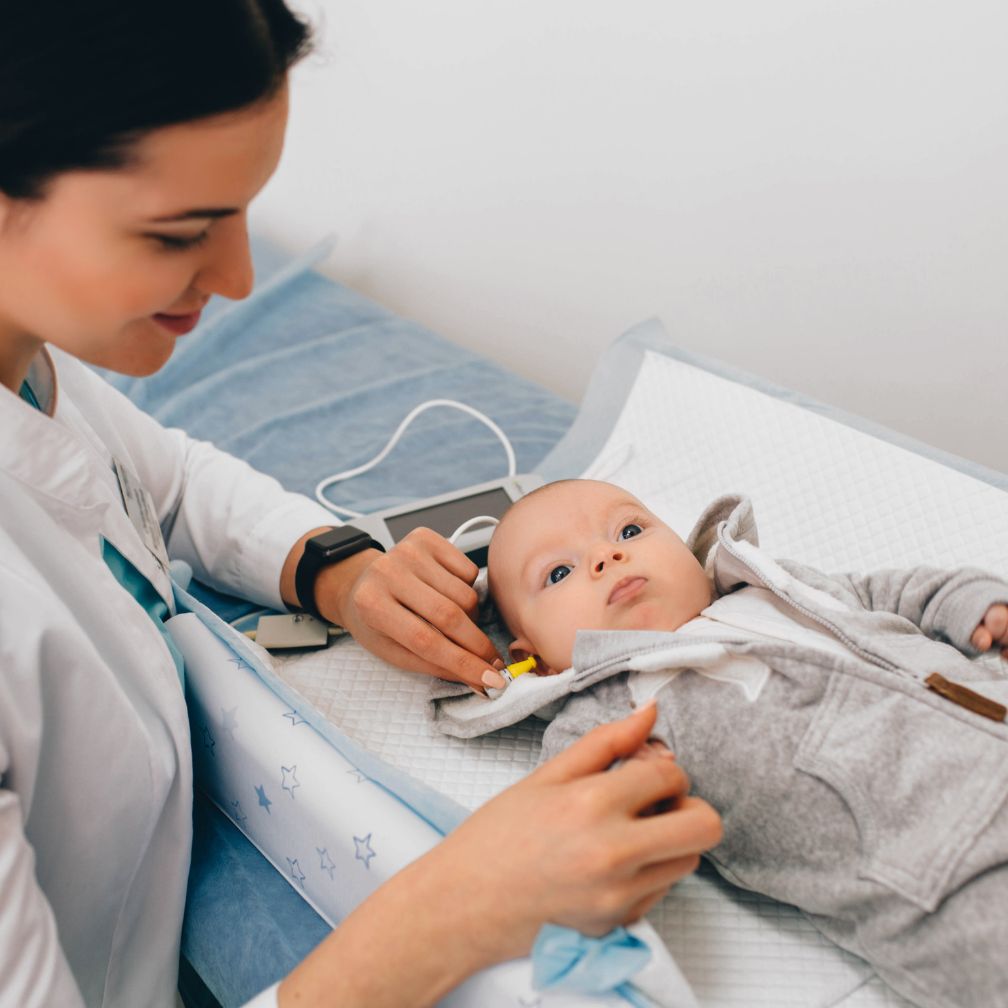
For young parents, discovering that their infant has a hearing loss inevitably feels heartbreaking and frightening. Fortunately, the hopeful truth is: thanks to rapid diagnosis and early treatment, babies with hearing impairment are positioned to prosper. Indeed, these children can master speech, interactive capabilities, and rich relationships across their environment, resulting in a fulfilling life!
Deploying personal hearing aids alongside cochlear implantation options yields two outstanding clinical approaches for assisting infants with hearing loss. Down below, we investigate how both instruments operate to enable you to choose which pathway best serves your youngster.
Demystifying Hearing Deficits in Newborns
Auditory decline across newborns frequently arises from several potential sources, including:
- Known hereditary genetic markers (even completely lacking any prior parental history)
- Maternal congenital infections including cytomegalovirus (CMV) or rubella infection
- Significant obstetric complications, featuring systemic oxygen lack or early gestational delivery
- Select ototoxic pharmaceuticals administered in specialized neonatal units
What matters above all else? Prompt clinical identification. This necessity explains why babies in United States hospitals complete hearing tests prior to leaving the birth facility. Pediatric audiology specialists faithfully maintain the official “1-3-6” operational timeline:
- Initial screening completed before 1 month of life
- Thorough clinical diagnosis secured before 3 months of age
- Specialized intervention (incorporating wearable options or targeted therapy) initiated by 6 months of age
Achieving these explicit timeline goals grants infants optimal opportunities for strong speech, verbal communication, and neurological growth. Should you desire expert guidance concerning these newborn screens, your pediatrician remains eager to support you!
Understanding Amplification Devices for Infants
When treating infants affected by mild to severe hearing loss, calibrated hearing aids typically act as the foundational first step. Such compact, fitted instruments intensify sound signals, enabling babies to process spoken dialogue and surrounding noise with greater accuracy.
Customized infant hearing instruments operate as:
- Entirely safe for clinical use in babies only a few weeks after birth
- Constructed using soft, non-irritating ear inserts that adjust as the child grows
- Equipped with tamper-proof battery doors and pediatric-specific features
- Precisely tuned by a certified pediatric audiologist to accommodate your child’s specific hearing levels
While your infant develops, these hearing units require routine clinical adjustments to preserve physical comfort and functional efficacy.
Understanding Cochlear Implantation for Babies
In cases where a baby suffers from severe to profound sensorineural hearing loss that fails to respond adequately to conventional hearing aids, a cochlear implant may be recommended. Differing from external acoustic hearing aids, modern cochlear implants:
- Require a specialized surgical operation for precise fit executed by a pediatric specialist
- Routinely bypass non-functioning sensory hair cells of the inner ear system
- Process incoming sound into refined electrical impulses that stimulate the auditory nerve directly
State-of-the-art cochlear systems function as:
- Clinically cleared by the FDA for infants beginning around 9 to 12 months
- Maximally beneficial when combined with early intervention services and strong family involvement
- Recommended only after comprehensive clinical evaluations by an expert audiologist and ENT specialist
That multi-step journey involves temporal bone imaging, objective hearing assessments, and conversations about long-term expectations and outcomes.
Hearing Aids vs. Cochlear Implants: What’s the Difference?
- Mild to severe levels of impairment utilize Hearing Aids; Severe to profound auditory destruction warrants Cochlear Implants
- Non-Invasive external fitting: Hearing Aids; Invasive surgical procedure: Cochlear Implants
- Sound processing amplification: Hearing Aids; Direct conversion to electrical signals: Cochlear Implants
- Fitting starts at early infancy: Hearing Aids; Placement starts at 9-12 months: Cochlear Implants
Final Takeaways: Navigating Infant Hearing Solutions
In the event your infant receives a hearing loss diagnosis, you can rely on excellent technological options and robust community resources exist to help you. Under the care of specialized pediatric hearing doctors, numerous children grow to master language capabilities completely equal to their hearing peers.
Whether your youngster qualifies for external hearing aids or surgical cochlear implants, acting swiftly establishes a foundation for lifelong communicative success.
Have questions about your baby’s hearing health? Reach out to us today to obtain an exhaustive evaluation and custom-designed care plan.